
Built : The Complete Guide to Exercise Physiology, Hypertrophy, & Sport-Specific Training
$45.00
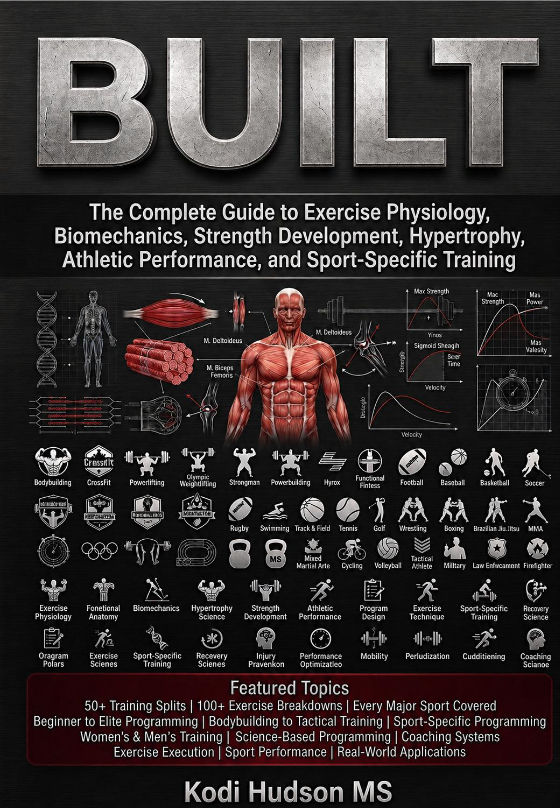
Built : The Complete Guide to Exercise Physiology, Biomechanics, Strength Development, Hypertrophy, Athletic Performance, and Sport-Specific Training
Take a deep, science-based dive into how the human body actually works during training. Built Exercise Physiology Training breaks down the physiology of muscle growth, energy systems, fatigue, biomechanics, and exercise execution in a way that connects directly to real-world training results.
What You’ll Learn Inside:
• Science-Based Training Principles: Learn how muscle growth, strength development, fatigue, and progress actually work through simple explanations of hypertrophy, recovery, and adaptation.
• Complete Program Design Strategies: Build effective training programs using volume, intensity, frequency, exercise selection, progressive overload, periodization, and autoregulation tailored to your goals and recovery.
• Exercise Physiology Made Practical: Understand muscle function, fiber types, energy systems, and how every rep creates a growth stimulus you can apply directly in the gym.
• Bodybuilding, Strength, and Athletic Performance: Train for hypertrophy, strength, powerlifting, conditioning, sport performance, and physique development across multiple training goals.
• Recovery, Injury Prevention, and Longevity: Learn how to manage fatigue, avoid injuries, improve movement quality, and build a body that performs consistently long-term.
• Coaching and Real-World Application: Apply exercise science with practical coaching tools, troubleshooting methods, program adjustments, and real athlete case examples.
Topics Covered:
• Full-body training science and exercise physiology
• Muscle anatomy and function (upper and lower body)
• Energy systems, fatigue, and recovery
• Muscle growth and strength development principles
• Exercise biomechanics and movement mechanics
• Exercise selection and execution fundamentals
• Complete exercise library and training methods
• Program design, splits, and periodization
• Fatigue management and autoregulation
• Bodybuilding, strength, and athletic performance training
• Sport-specific and tactical athlete development
• Injury prevention and recovery strategies
• Nutrition, supplementation, and recovery basics
• Coaching, troubleshooting, and program adjustments
• Training psychology and performance mindset
• Real-world application and case studies
Perfect For:
• Lifters who want to understand the science behind training
• Bodybuilders and physique athletes
• Coaches and personal trainers
• Strength athletes and performance-focused lifters
• Anyone who wants to stop guessing and start training intelligently
Table of Contents
Introduction…………………………………………………………………………………………….. 8
PART ONE Groundwork
1. Why Most of What You’ve Been Told Is Wrong………………………………… 14
2. A Short History of Lifting………………………………………………………………….. 17
3. Genetics, Individual Response, and Realistic Expectations………………….. 19
PART TWO The Machine
4. How Muscle Actually Works……………………………………………………………… 23
5. A Tour of the Body, Muscle by Muscle………………………………………………. 26
6. Energy, Fatigue, and What “Tired” Really Means……………………………….. 31
7. The Mechanics of Every Rep……………………………………………………………… 34
8. Hormones and Training……………………………………………………………………… 38
9. Muscle Fiber Types and Individual Differences………………………………….. 41
PART THREE Growth and Strength
10. How Muscle Grows…………………………………………………………………………. 45
11. The Real Drivers of Growth…………………………………………………………….. 51
12. The Science of Volume……………………………………………………………………. 59
13. How Strength Is Built………………………………………………………………………. 66
PART FOUR How to Train
14. The Levers You Pull………………………………………………………………………… 70
15. Advanced Techniques and When They’re Worth It…………………………… 73
16. Warming Up, Mobility, and Movement Prep…………………………………….. 78
17. Executing the Big Lifts…………………………………………………………………….. 81
18. The Science of Exercise Selection…………………………………………………….. 86
19. The Complete Exercise Library………………………………………………………… 90
20. Core and Abdominal Training………………………………………………………….. 94
21. Conditioning and Cardio Done Right………………………………………………… 96
22. Training Around Injuries……………………………………………………………….. 100
PART FIVE Structuring It
23. Choosing a Split…………………………………………………………………………….. 104
24. The Split Encyclopedia………………………………………………………………….. 107
25. Periodization: Organizing Training Over Time……………………………….. 110
26. Designing Your Own Program……………………………………………………….. 115
27. Autoregulation and Tracking Progress……………………………………………. 120
28. Programs You Can Run Tomorrow………………………………………………… 124
29. Training With Minimal Equipment, at Home, and on the Road………… 129
PART SIX Building a Physique
30. The Bodybuilding Process……………………………………………………………… 145
31. The Improvement Season……………………………………………………………….. 151
32. The Science of Fat Loss…………………………………………………………………. 157
33. Training Intent and the Mind-Muscle Connection……………………………. 165
34. Proportion, Symmetry, and the Aesthetic Eye…………………………………. 168
35. The Men’s Divisions……………………………………………………………………… 171
36. The Women’s Divisions…………………………………………………………………. 177
37. The Science of Glute Development………………………………………………… 182
38. Building the Chest…………………………………………………………………………. 191
39. Building the Back………………………………………………………………………….. 194
40. Building the Shoulders…………………………………………………………………… 197
41. Building the Arms…………………………………………………………………………. 200
42. Building the Legs…………………………………………………………………………… 204
43. Building the Calves……………………………………………………………………….. 208
44. Bringing Up a Weak Point……………………………………………………………… 211
45. Training Through a Prep: Early, Mid, and Late……………………………….. 213
46. Contest Prep: Peaking, Peak Week, and the Stage…………………………… 223
47. Training Through a Contest Prep……………………………………………………. 229
48. Building and Adjusting the Prep Split…………………………………………….. 233
49. Posing and Presentation…………………………………………………………………. 237
PART SEVEN Strength and Hardcore Sports
50. Powerlifting…………………………………………………………………………………… 240
51. Powerlifting Programs and Methods……………………………………………….. 246
52. Powerbuilding……………………………………………………………………………….. 259
53. Olympic Weightlifting…………………………………………………………………… 265
54. Strongman…………………………………………………………………………………….. 270
55. CrossFit………………………………………………………………………………………… 275
56. Hyrox and Hybrid Racing………………………………………………………………. 279
PART EIGHT The Athlete
57. The Athletic Foundation………………………………………………………………… 286
58. Training Across the Competitive Season…………………………………………. 290
59. Speed Development……………………………………………………………………….. 294
60. Agility and Change of Direction…………………………………………………….. 297
61. Power Development………………………………………………………………………. 299
62. Plyometrics……………………………………………………………………………………. 302
63. Rotational Performance………………………………………………………………….. 305
64. Return to Sport After Injury……………………………………………………………. 307
PART NINE Sport by Sport
65. American Football…………………………………………………………………………. 311
66. Basketball……………………………………………………………………………………… 316
67. Soccer…………………………………………………………………………………………… 321
68. Baseball and Softball……………………………………………………………………… 325
69. Ice Hockey……………………………………………………………………………………. 329
70. Rugby…………………………………………………………………………………………… 333
71. Volleyball……………………………………………………………………………………… 337
72. Sprinting and Jumping…………………………………………………………………… 340
73. Distance Running………………………………………………………………………….. 343
74. Swimming…………………………………………………………………………………….. 346
75. Tennis…………………………………………………………………………………………… 349
76. Golf………………………………………………………………………………………………. 352
77. Cycling…………………………………………………………………………………………. 355
78. Boxing………………………………………………………………………………………….. 358
79. Mixed Martial Arts………………………………………………………………………… 362
80. Wrestling………………………………………………………………………………………. 366
81. Brazilian Jiu-Jitsu………………………………………………………………………….. 370
82. Lacrosse………………………………………………………………………………………… 373
83. Track and Field Throws…………………………………………………………………. 376
84. Rowing…………………………………………………………………………………………. 379
85. Triathlon……………………………………………………………………………………….. 382
86. Pickleball………………………………………………………………………………………. 385
87. Cricket………………………………………………………………………………………….. 387
88. Rock Climbing and Bouldering………………………………………………………. 390
89. Calisthenics and Bodyweight Training……………………………………………. 392
90. Martial Arts: Striking and Traditional…………………………………………….. 395
91. Skiing and Snowboarding………………………………………………………………. 397
92. Gymnastics……………………………………………………………………………………. 399
93. Obstacle Course Racing…………………………………………………………………. 401
94. Racquet Sports: Squash, Badminton, and Table Tennis……………………. 403
95. Surfing and Paddle Sports………………………………………………………………. 405
96. Hiking, Rucking, and Mountaineering…………………………………………….. 407
PART TEN The Tactical Athlete
97. The Tactical Foundation………………………………………………………………… 411
98. Military Enlistment and Basic Training…………………………………………… 415
99. Special Operations Selection………………………………………………………….. 418
100. Police Academy…………………………………………………………………………… 421
101. SWAT and Tactical Units…………………………………………………………….. 424
102. Firefighting………………………………………………………………………………….. 427
PART ELEVEN The Rest of the Picture
103. The Female Athlete……………………………………………………………………… 432
104. Training Through Pregnancy, Postpartum, and Menopause……………. 435
105. Youth and Adolescent Training……………………………………………………. 437
106. Training Through the Decades……………………………………………………… 441
107. Supplements: What Works and What’s a Waste…………………………….. 443
108. Natural vs Enhanced: What Actually Changes………………………………. 446
109. Recovery…………………………………………………………………………………….. 448
110. The Science of Recovery Monitoring……………………………………………. 451
111. Overtraining, Overreaching, and Burnout……………………………………… 454
112. Injury, Pain, and Bulletproofing the Body…………………………………….. 457
113. The Mind…………………………………………………………………………………….. 459
114. Body Image, Disordered Eating, and Mental Health in Physique Sport……………………………………………………………………………………………………………. 461
115. The Psychology of Elite Performance…………………………………………… 463
PART TWELVE Coaching
116. Athlete Assessment……………………………………………………………………… 466
117. Identifying Weak Links……………………………………………………………….. 468
118. Communication……………………………………………………………………………. 470
119. Program Adjustments…………………………………………………………………… 472
120. Troubleshooting Plateaus……………………………………………………………… 474
121. Coaching Different Personalities…………………………………………………… 476
122. Coaching Men and Women………………………………………………………….. 478
123. Coaching Beginners and Advanced Athletes…………………………………. 480
124. Remote Coaching………………………………………………………………………… 482
PART THIRTEEN Putting It Together
125. The Science of Individualization…………………………………………………… 484
126. Why Training Does Not Transfer: The Specificity Principle………….. 487
127. Myths and Truths…………………………………………………………………………. 491
128. Case Studies: The Thinking in Action…………………………………………… 495
129. The Future of Training…………………………………………………………………. 496
130. A Final Word………………………………………………………………………………. 497
PART FOURTEEN Bonus
131. My Favorite Workout Plans………………………………………………………….. 499
Selected Bibliography and Further Reading………………………………………….. 512
Reviews
There are no reviews yet.